The role of teachers in the Montessori system is to teach each child on an individual basis. The method does not impose lessons on anyone; the work is based on guiding and helping each child according to his or her needs. The guide does not intervene until the child requires it.
From “Teacher” to “Guide”
María Montessori called the teacher a “director” (or directress), a person who must be internally (spiritually) and externally (methodologically) prepared. This expert should organize the environment to help the child develop a structured, orderly mind.
Today, most Montessori schools use the word guide. The name reflects the job: rather than standing at the front of the room delivering the same lesson to everyone, a Montessori guide moves through the classroom, observes, and offers the right lesson to the right child at the right moment.
What a Montessori Guide Does Each Day
- Observes. Careful observation is the foundation of the method. Guides watch what each child is drawn to, what they have mastered, and where they need support.
- Prepares the environment. Materials are arranged on low, open shelves in a deliberate order, from simple to complex, so children can choose their own work and return it when they are done.
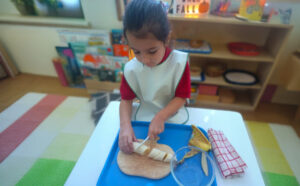
- Presents lessons. Lessons are usually given one-on-one or in small groups, with slow, clear movements and few words, so the child can see exactly how to use a material.
- Steps back. Once a child understands a material, the guide lets them practice independently, repeating the work as many times as they need.
- Models respect. Guides speak to children calmly and courteously, which is how children learn grace and courtesy themselves.
Respecting Each Child’s Rhythm
Children are full of possibilities. The guide is responsible for showing children the way to their own development, and must believe in the ability of each child while respecting different rhythms of development. This practice allows different types of learners to share the same group: those who need more time alongside those who are ready to move ahead. It is one reason Montessori classrooms are mixed-age, with younger children learning from older classmates.
Montessori’s idea is to let the child feel able to act without constantly relying on an adult, so that he or she develops curiosity and creativity and learns to think independently. You can see this approach in action in lessons such as Montessori math and Practical Life.
A Partnership With Families
Because guides observe each child so closely, they are also a valuable partner for parents. Sharing what a child is working on at school helps families support the same independence and routines at home.
Meet the guides and staff of Gables Montessori on our Faculty & Staff page, or schedule a tour to see them at work in the classroom.