In the past, it was rare to see one-child families. But in the last century, the situation changed for many reasons such as family planning, emotional issues, late marriage, fears over pregnancy or advanced age, and other circumstances such as divorce, infertility, or the death of a parent. It has become more complicated to support several children, and modern society has led many mothers to enter the labor market to contribute to the family budget. Many families have made the decision to have one child and give him all the opportunities and privileges.
Siblings or an Only Child?
Many theories about the advantages and disadvantages of growing up without brothers and sisters have been published, and opinions vary. For some experts, living as an only child is a normal experience, while others think that the relationship between siblings is essential for the development of the human being. Both have positive and negative aspects that can be analyzed.
Older brothers and sisters are excellent playmates and role models; living together, children can learn feelings such as generosity, respect, and companionship.
Fights between siblings are normal situations in a house. In these cases, parents have to intervene to teach them to control situations and to understand the needs of each one.
Perhaps an advantage of being an only child is that there is no competition and no pressure to prove his capabilities, which can create a greater sense of independence when developing his own interests or tastes.
Tips for Raising an Only Child
When parents decide to have only one child, they can follow some recommendations:
- Give the child the opportunity to interact with others, not only at school but also in the neighborhood, with relatives, and in activities such as sports practices.
- Teach your kids to develop social skills. Many parents speak for their children when they interact with adults or other children, which is not the best approach. Instead, give them guidelines so they can learn to build their relationships, join playgroups, wait their turn, or accept being excluded without distress.
- Promote the independence of the child, letting him know that though most of the time he interacts with adults, he can make his own decisions and entertain himself. A parent can promote independence by giving her child some responsibility.
- Demonstrate by example how to share, compromise, and show consideration for others. A good technique is praising your child when he is considerate and explaining the consequences when he is not.
- Set clear boundaries. Children who live with adults may believe they have equal power, so make boundaries clear and keep important decisions in parents’ hands.
- Teach your children to wait. An only child receives answers to his demands quickly because there are no other siblings on the waiting list. Nevertheless, life is not always like that; let him know that patience is a good gift.
How a Montessori Classroom Helps
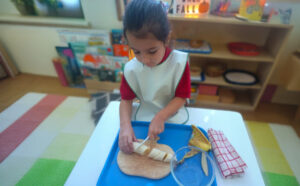
Mixed-age Montessori classrooms give every child, including only children, a little of the sibling experience. In our Primary Program, children ages 3 to 6 learn side by side: younger children learn by watching older classmates, and older children practice patience and leadership by helping. Schedule a tour to see it in action.