Montessori education is not limited to the classroom—it can be a meaningful part of everyday life at home. By creating an environment that supports independence, curiosity, and hands-on learning, families can extend the Montessori philosophy into daily routines.
Creating a Child-Centered Environment
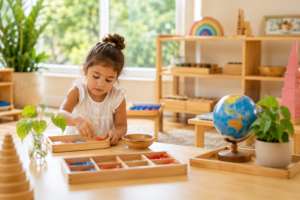
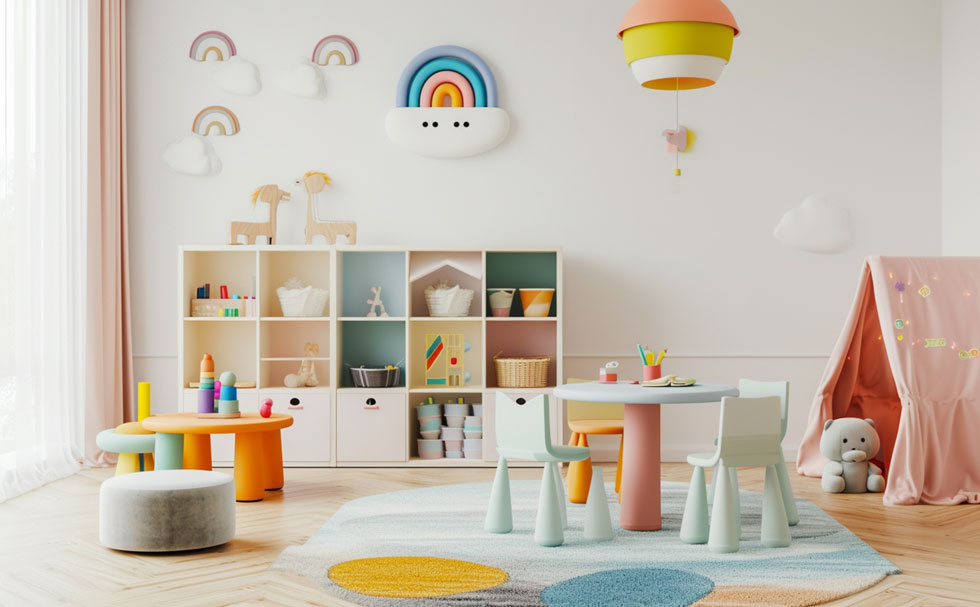
A Montessori-inspired home begins with accessibility. Children thrive when they can reach and use materials on their own.
Simple adjustments can make a big difference:
- Low shelves with organized toys and activities
- Child-sized furniture
- Accessible clothing and personal items
When children can independently choose and return their materials, they develop responsibility and confidence.
Encouraging Independence Through Daily Tasks
Everyday routines offer valuable learning opportunities. In a Montessori home, children are encouraged to participate in real-life activities rather than being passive observers.
Depending on their age, children can:
- Help prepare simple meals
- Clean up spills or organize their space
- Dress themselves
These tasks build practical life skills while strengthening focus and coordination.
Hands-On Learning with Purpose
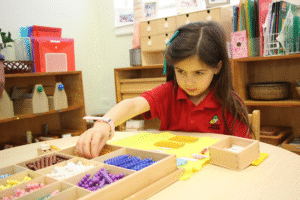
Montessori at home emphasizes purposeful activities rather than passive entertainment. Instead of overwhelming children with toys, offer a few carefully chosen materials that encourage exploration.
Activities can include:
- Sorting and matching objects
- Pouring and transferring exercises
- Simple puzzles and building materials
Rotating activities regularly keeps children engaged and curious.
Connecting with Nature
Nature plays an essential role in Montessori education. Spending time outdoors allows children to explore, observe, and develop a deeper appreciation for the world around them.
Families can incorporate nature by:
- Taking daily walks
- Gardening together
- Observing plants, insects, and weather changes
These experiences foster curiosity and a sense of responsibility for the environment.
Following the Child
One of the most important Montessori principles is observing and following the child’s interests. Instead of directing every activity, parents can support what naturally captures their child’s attention.
When children are engaged in something they love, learning becomes more meaningful and lasting.
Final Thoughts
Bringing Montessori into the home does not require a complete transformation—it begins with small, intentional changes that empower children to learn and grow independently.
If you are interested in learning more about how Montessori principles can support your child’s development, we invite you to connect with our school community.
Schedule a tour today to see how Montessori education can make a lasting impact on your child’s future.